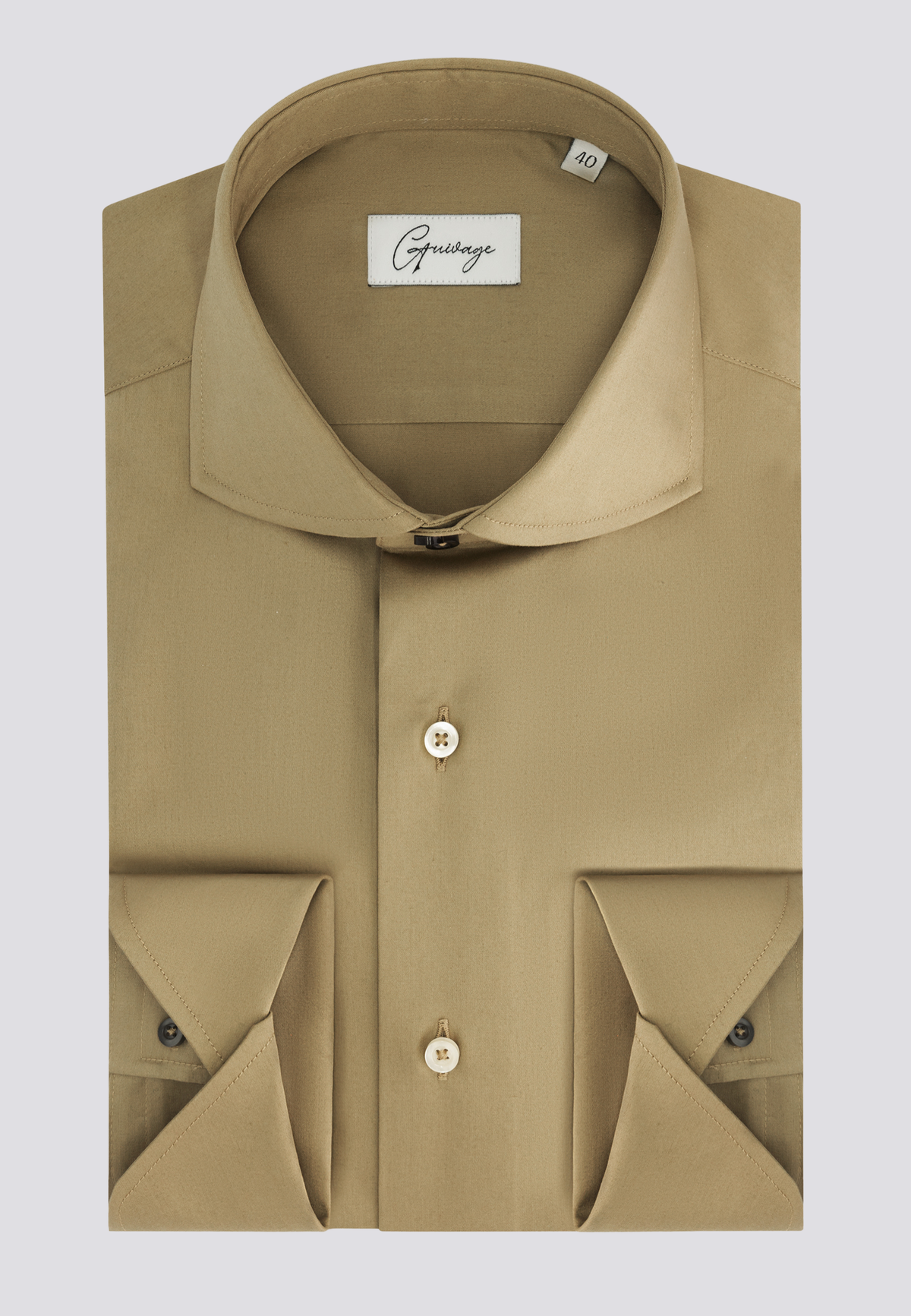

The cloth
Twill, and why it wears so well
A weave built on the diagonal — softer to the touch, quicker to shed a crease, and made to look right from the first morning to the hundredth.
Woven on the diagonal
Where a plain weave crosses one thread over one, twill steps each row across by one — the diagonal line you can see up close and feel in the hand. That single change is why a twill shirt drapes instead of hangs, softens instead of stiffens, and carries a day without complaint.
How it is made
A weave you can read up close
Three things happen in a good twill. None of them shout. All of them are the reason you reach for it again.
01 — The diagonal
The line that does the work
Look closely and you will see the fine diagonal wale running across the cloth. It is not decoration — the offset weave lets the yarns sit closer and move against one another, and that is where twill's softness and its quiet drape both come from.
02 — The hand
Substance without stiffness
We weave our twill from fine long-staple yarn in Italian mills, at a density you feel before you can name it. It has weight and a smooth, almost brushed hand — the kind of cloth that falls into a clean line over the shoulder and stays there.
03 — The finish
Where it becomes a Guivage
Each shirt is cut and finished in small runs, closed with mother-of-pearl buttons and marked by our signature contrast thread at the placket and cuff — the detail a discerning eye finds first, and remembers.
Why it earns its place
Three reasons the twill lasts
The things that make a shirt worth keeping are rarely loud. These are the ones that matter.
01
A closer weave
The tight diagonal structure packs more yarn into every centimetre. That density is what resists wear at the collar and cuff — and why a good twill outlasts three ordinary shirts.
02
Forgives a crease
The raised diagonal breaks up light and movement, so folds fall out and creases barely register. It travels from a case to a dinner looking as though you meant it.
03
A quiet sheen
Twill catches light along the wale with a soft, low lustre — never shiny, always considered. It reads refined in a room without ever asking to be noticed.